

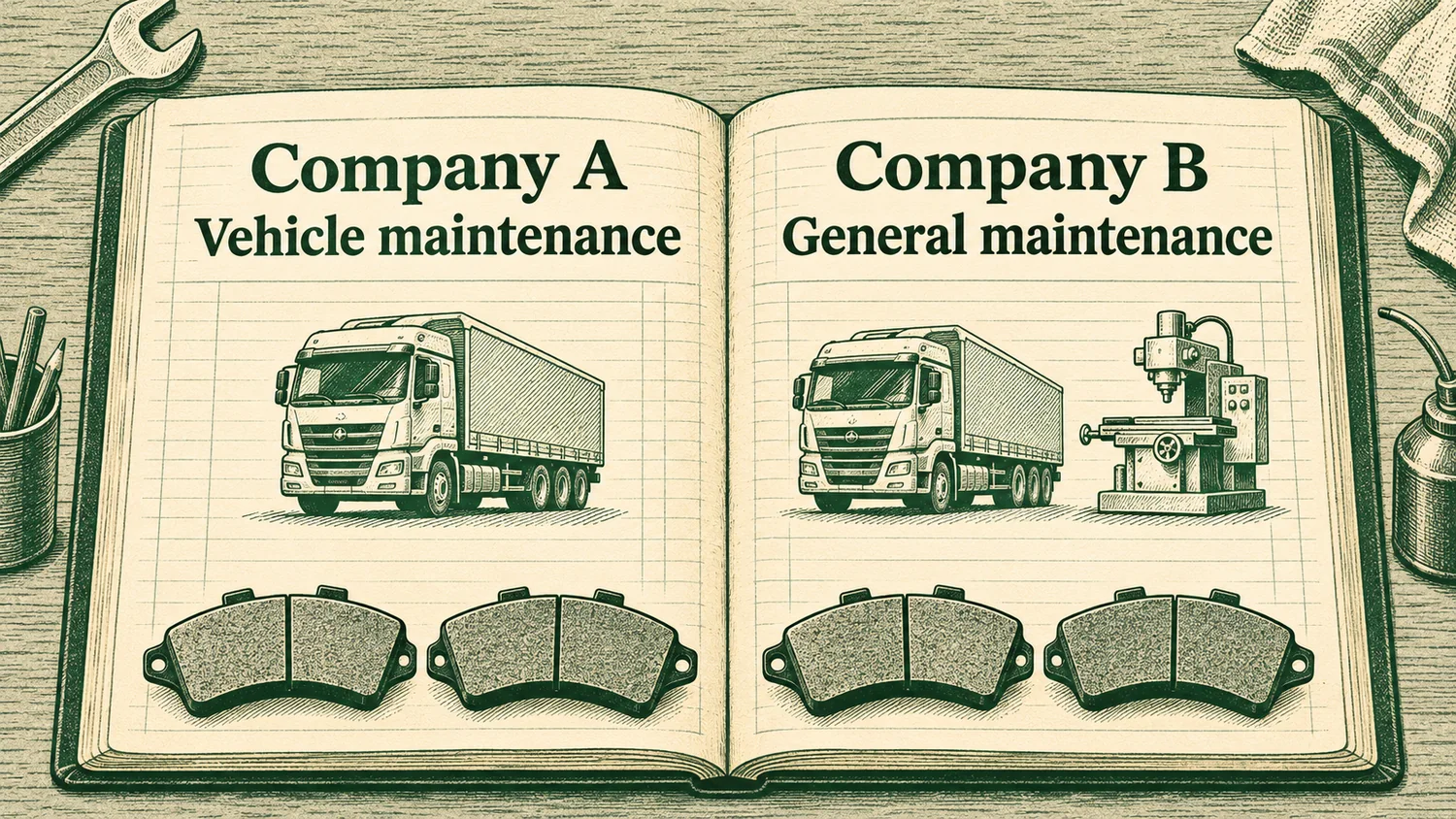
A group CFO asks what two subsidiaries spent maintaining their truck fleets last year. Company A reports €100,000 in vehicle maintenance. Company B reports €300,000 in general maintenance. Which fleet cost more to maintain?
Follow a set of brake pads through the two ledgers. Company A charges the pads to a dedicated vehicle maintenance account. Company B buys the same pads for the same model of truck and charges them to the account it also uses for repairs to production machinery. Both annual totals reconcile to the cent.
Perhaps €50,000 of Company B’s total went to trucks. Perhaps it was €250,000. Either figure fits the ledger, and each gives the CFO a different answer. Mapping both accounts to a group line called “Maintenance” preserves the combined €400,000. It also buries a distinction Company A took the trouble to record.
What does each company count as maintenance?
Suppose both controllers now submit a figure under the same heading, “Fleet maintenance”. Company A includes a share of the workshop supervisor’s pay. Company B leaves supervision in central overhead. Even if the workshops use the same number of hours to do the same jobs, one fleet will appear more expensive on that basis alone.
Now consider a replacement gearbox. Each company buys one at the same price. Company A records its replacement as a repair and charges the cost to maintenance this year. Company B records its replacement as a fixed asset and recognises the cost over time through depreciation. A search of the two maintenance accounts would find only one of the two purchases.
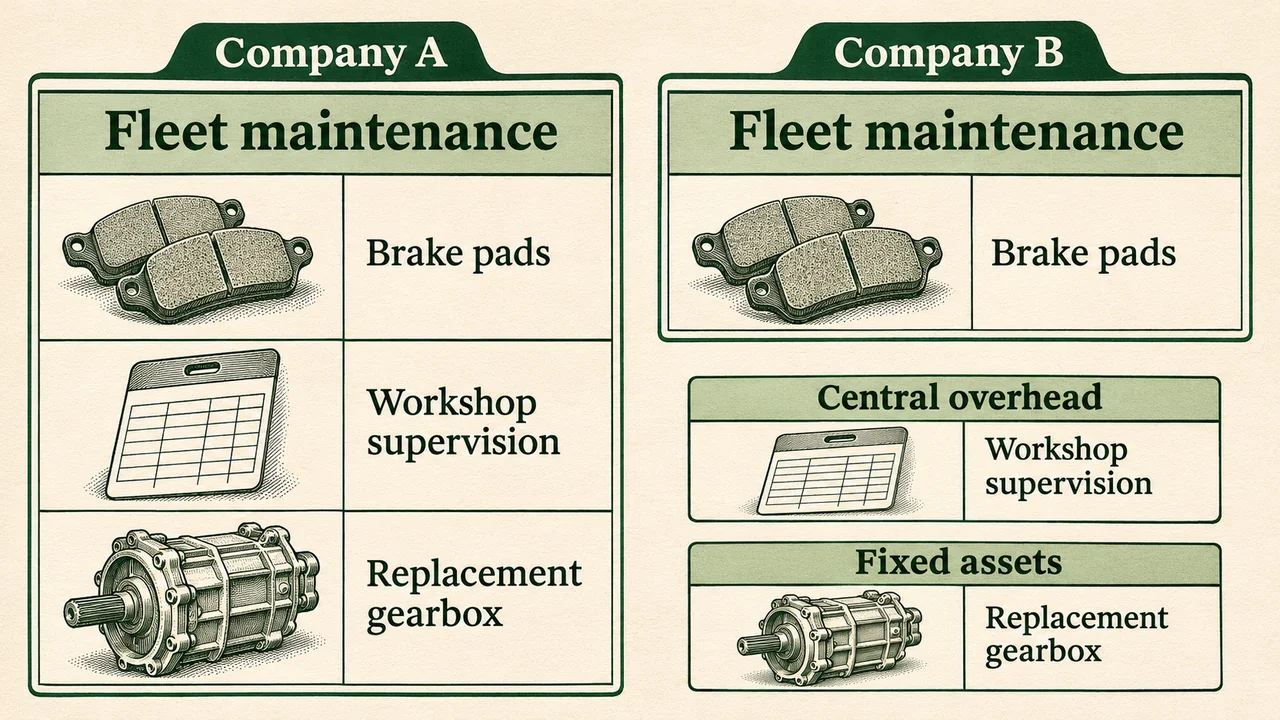
The CFO may want to compare parts purchased, maintenance expense recognised this year or the full cost of operating each workshop. Those are three different measures. A common account name cannot decide how to treat supervision or when a gearbox enters the comparison. For a newly acquired company, the group may be asking these questions about transactions recorded years before it arrived.
What can we recover from the original records?
Take Company B’s brake pads again. A line on the supplier’s invoice gives the part number, quantity and unit price. A workshop order links the purchase to a particular truck. That evidence lets finance include the pads in a group-wide comparison of fleet purchases while leaving Company B’s local posting intact.
At Corvenia Labs we’re building a data warehouse that connects ledger entries to invoices, receipts and vouchers. We’re researching how AI can interpret each line in light of the supplier, the company’s activities and purchasing patterns across the group. If a supplier serves both factories and fleets and the invoice says only “service work”, the supplier’s name is a clue. Identifying the job may still take a work order or a question for the local team.
Keeping that detail gives finance a way to answer questions nobody anticipated when the accounts were set up. Did one company pay more for the same pads, or did it buy more sets? The first finding gives purchasing a reason to review supplier terms. The second gives fleet managers a reason to look at mileage and repair histories.
Finance decides what to delegate
A controller investigating those repairs may want to inspect the invoice lines in Excel. A colleague may prefer to review them in a web interface. Once the team trusts how recurring purchases are classified, it may choose to delegate that work to an agent and review the ambiguous cases itself. We’re designing Corvenia to support that progression at the pace each finance team chooses.
For the CFO, a useful answer explains how much of the difference comes from the way the two companies keep their books, how much comes from running their fleets, and where the evidence still leaves a question open.
