

What did we spend maintaining our fleet?
Two companies buy the same truck parts. Their maintenance figures differ with account scope, overhead and capitalisation. Invoice lines help finance trace the difference back to the purchases.

Corvenia Labs researches how AI can help finance teams explain what drives performance across a corporate group.

Exploring how advances in AI can strengthen corporate control, from spotting a change in costs to understanding what drove it.


Technical write-ups, architecture notes, and performance benchmarks from the Corvenia Labs team.

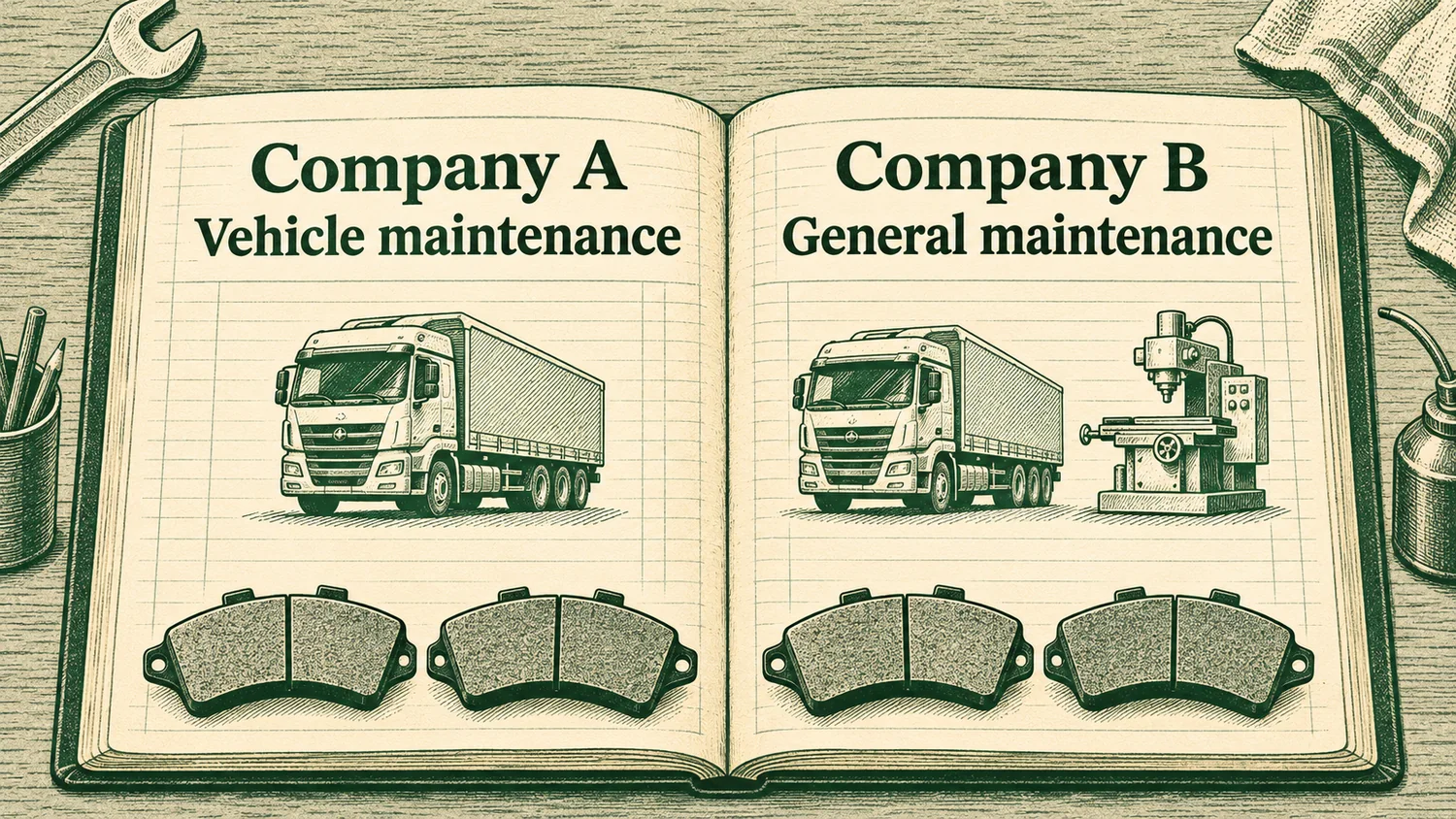
Two companies buy the same truck parts. Their maintenance figures differ with account scope, overhead and capitalisation. Invoice lines help finance trace the difference back to the purchases.
Two companies buy the same truck parts. Their maintenance figures differ with account scope, overhead and capitalisation. Invoice lines help finance trace the difference back to the purchases.

Corvenia chose Blazor Server over React. Removing the HTTP/DTO boundary and keeping one compiler loop makes more correctness machine-verifiable, the key constraint for AI coding agents.

Corvenia Labs pairs a zero-JS .NET 10 static compiler with cached CLI agents (agy, codex, claude) that read per-article inspiration folders to generate summaries, llms.txt metadata, and on-brand SVG hero art.
A consolidated report can show that costs rose across a group. Explaining the increase means tracing it to particular companies, purchases and operating decisions.
An acquisition brings years of transactions recorded under a different chart of accounts. We’re building a data warehouse that links local entries to group accounts and keeps the source records available for comparison.
We study how AI can identify a purchase from an invoice line, its supplier and the company’s buying history. Quantities and unit prices help finance distinguish buying more of an item from paying more for it.
We research how AI can use an ERP’s API documentation to build a connector and check its output against source records. When the API changes, we study how an agent can identify the affected mappings, update them and verify the repair.
We’re designing Corvenia so controllers can investigate a variance in the tool they prefer, such as Excel or Corvenia’s web interface. They decide whether to ask an agent for an explanation or delegate the monthly check and review exceptions.

Financial software demands uncompromising rigor. Our engineering culture pairs systems-level performance with strict European data governance.

Row-level security, cryptographic tenant boundaries, and full European data residency on Microsoft Azure.

LLMs never invent or round financial balances. Every currency translation and elimination rule is reproducible and unit-tested.

Every transformation from raw ERP API payload to consolidated board report is versioned and inspectable.
Our architecture powers multi-entity groups and private equity portfolios across the Nordics and Europe.
See what changed. Understand why. Decide what to do next.
Explore the Corvenia platform or dive into our engineering articles.